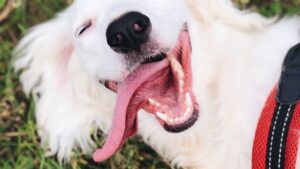
Why Oral Health Is the Missing Link in Your Dog’s Long-Term Wellbeing

Lorem ipsum dolor sit amet, consectetur adipiscing elit.
Ut elit tellus, luctus nec ullamcorper mattis, pulvinar dapibus leo.

When it comes to keeping our dogs healthy, we often focus on nutritious food, exercise and regular vet visits. Yet one of the most overlooked aspects of their well-being is oral health.

According to Dr Jan, dental disease is one of the most common health issues seen in dogs, but it often goes unnoticed until it has already progressed.

“Many pet owners think bad breath is normal, but it can be one of the first signs of dental disease,” says Dr Jan. “Because dogs are very good at hiding discomfort, dental problems can develop long before owners realise something is wrong.”

The challenge is that dental disease develops gradually. Plaque starts building up on teeth every day and, over time, hardens into tartar. Left unchecked, this can irritate the gums and lead to more serious dental and health issues. That’s why preventative care is so important.

Just like regular walks, healthy meals and playtime, oral care should form part of a dog’s daily routine. Small, consistent habits can make a big difference over time.

One of the easiest ways to support oral health is through healthy chewing. Chewing is a natural behaviour for dogs and can help reduce plaque buildup while also providing mental stimulation and enrichment.

“Chewing plays an important role in a dog’s daily routine, but it’s important to choose safe options,” says Dr Jan. “Many people believe hard bones are best for cleaning teeth, but they can sometimes lead to fractured teeth and other injuries. Cooked bones, especially bones with sharp edges such as chop bones, can be dangerous as they break when chewing and can lodge in various places in the gut, creating major issues which will need surgery.”

Dr Jan recommends that pet owners think of dental care as part of a broader wellness routine.

“Dry food (kibble) of the correct size for your dog is a good start to dental care and should be supplemented with additional measures,” he says.

Every dog has their own unique personality. Some are the confident strutters, some are the playful adventurers, and others are happiest curled up on the couch. Whatever their style or swagger, one thing most dogs have in common is that they love to chew.

For dogs who love to put their teeth to work, dental chews can be an easy way to turn a favourite activity into a healthy habit. Beeno Dental Chews are specially designed to help reduce tartar buildup while satisfying a dog’s natural urge to chew. Think of it as one of the few times your dog can support their health simply by doing something they already love.

Whether your dog is a high-energy explorer, a social butterfly at the dog park or a laid-back lounger at home, maintaining good oral health can help keep tails wagging for longer.

“A healthy mouth contributes to a healthier, happier dog,” says Dr Jan. “Preventive care is always easier than treating advanced dental disease.”

Alongside regular veterinary check-ups, good nutrition and plenty of exercise, adding a dental chew such as Beeno Dental Chews to your dog’s routine is a simple step that can help support long-term health, wellbeing and plenty of confident smiles.

Image by Anna Galimova from Pexels

About Bob Martin & Co.
Bob Martin & Co. was founded in 1892 by 25-year-old Robert Martin – and the Martin family, still passionate about animals and their health, owns the company to this day.
Since Bob Martin & Co. was established, our love of animals has guided us to make affordable and high-quality pet healthcare available to all families. This is why many of our products are household names – available online and in stores worldwide.

Share this article

Related Posts

Tips for supporting your cat’s cattitude at mealtime

Anyone who lives with a cat knows that mealtime is rarely just about food. It is a ritual, a routine, and often, a very clear expression of personality. Some cats announce dinner loudly. Others hover quietly, inspect the bowl, take a few bites and walk away. Some want company while they eat, while others prefer a calm corner and no interruptions. To cat owners, this is often simply known as “cattitude”, but there is more behind these behaviours than attitude alone. Cats are naturally independent, territorial animals, and their feeding behaviour is closely linked to instinct, routine and environment. In the wild, cats are solitary hunters who eat several small meals throughout the day. This helps explain why many domestic cats prefer to graze, return to their bowls often, or show strong preferences around where, when and how they eat. Their senses also play a major role. Cats have a highly developed sense of smell, which means aroma is often just as important as taste. Texture, temperature and freshness can all influence whether a cat accepts a meal enthusiastically or gives it a very dramatic side-eye. Dr Jan, consulting veterinarian to Pamper, says mealtime behaviour can offer useful insight into a cat’s comfort and preferences. “Cats are creatures of habit, but they are also highly individual. Their behaviour around food can tell us a lot about their confidence, comfort and routine. A quiet feeding space, consistency and food they enjoy can all help support a calmer, more positive mealtime experience,” says Dr Jan. Because cats are sensitive to change, even small disruptions can affect how they eat. A new bowl, a different feeding spot, household noise, other pets nearby or a change in routine can all influence mealtime behaviour. For pet parents, paying attention to these cues can help create a feeding environment that feels safe, familiar and enjoyable. Dr Jan’s tips for supporting your cat’s cattitude at mealtime Keep it consistent Cats feel more secure when feeding times and routines are predictable. Try to feed at similar times each day and avoid unnecessary changes to their bowl or feeding area. Create a calm feeding space Choose a quiet spot away from heavy foot traffic, loud noise, litter trays and other pets. Many cats prefer to eat where they feel safe and undisturbed. Pay attention to texture and aroma Cats can be particular about smell, texture and freshness. If your cat seems hesitant, it may be responding to more than just flavour. Respect their independence Some cats enjoy company while they eat, while others prefer space. Watch your cat’s behaviour and let them guide the routine. Watch for changes A sudden change in appetite, eating speed or feeding behaviour can be a sign that something is off. If it continues, it is best to check in with your vet. For Pamper, feeding is about more than filling a bowl. It is about recognising the small behaviours that make each cat unique and creating everyday moments that support their natural independence, mood and personality. Pamper offers tasty, satisfying meals made for cats with character, helping pet parents turn daily feeding into a moment of care, connection and understanding. Whether your cat is a dramatic dinner announcer, a quiet grazer, a fussy foodie or the ruler of the kitchen, the right mealtime routine can help them feel seen, settled and satisfied. Because when it comes to cats, feeding is never just feeding. It is part instinct, part routine and part cattitude. Image by Wirestock from Getty Images About Bob Martin & Co. Bob Martin & Co. was founded in 1892 by 25-year-old Robert Martin – and the Martin family, still passionate about animals and their health, owns the company to this day. Since Bob Martin & Co. was established, our love of animals has guided us to make affordable and high-quality pet healthcare available to all families. This is why many of our products are household names – available online and in stores worldwide.

Read More

Why “itchy skin” is more than just a surface problem

We often think of itchy skin as something superficial, a quick fix with a cream or a change in weather. But increasingly, research is showing that the story runs much deeper. At its core, irritated or eczema-prone skin is a combination of what is happening on the skin surface as well as what is happening within the skin barrier itself. When this barrier becomes compromised, it allows moisture to escape and external irritants to get in, triggering that familiar cycle of dryness, sensitivity and inflammation as a result of an internal immune reaction. Experts often describe healthy skin using the “brick and mortar” analogy. When everything is functioning properly, skin cells are tightly packed together like bricks, held in place by lipids, ceramides and essential fatty acids acting as the mortar. But when that structure weakens, the skin becomes what scientists refer to as “leaky”, making it far more reactive to everyday environmental stressors. As Dr Jan, consulting veterinarian for Bob Martin, explains, “Whenever you see inflamed skin, regardless of the cause, the outer layer is compromised and more permeable. Once you repair that barrier, the skin no longer reacts as though it is under constant threat.” This is where some of the newer conversations around skincare are shifting. Instead of only treating the visible symptoms like redness or itching, there is a growing focus on restoring the integrity of the skin barrier itself. You’ll often hear terms like ceramide support, essential fatty acids, and barrier repair being used more frequently. These aren’t just buzzwords. They speak to the building blocks the skin needs to function properly, helping to reinforce its natural defences and reduce ongoing inflammation. Another emerging concept is how certain constituents can support the skin’s natural processes. For example, research highlights the role of proteins like filaggrin in maintaining a strong, functional epidermis and barrier, while ingredients such as linoleic and linolenic acid are part of the cell membrane and improve skin structure and hydration. The internal production of some of these are affected during inflammation and allowing them to re-establish is crucial to skin repair. What all this points to is a more holistic way of thinking about itchy skin. It’s no longer just about soothing the irritation in the moment, but about helping the skin return to a state where it can protect and regulate itself more effectively. Because ultimately, when the skin barrier is supported and allowed to repair, everything else starts to settle. The itching reduces, the inflammation calms, and the skin becomes far less reactive over time. Products like Bob Martin Dog and Cat Eczema Lotion using its Emzaloid™ technology allows the key ingredients of coal tar, diphenhydramine, linoleic acid and linolenic acid to reduce abnormal cell division in the skin (and boost filaggrin production), reduce itching, reduce inflammation as well as repair the epidermal barrier which gives long-term relief. Image by Irina Orlova – @gettyimages About Bob Martin & Co. Bob Martin & Co. was founded in 1892 by 25-year-old Robert Martin – and the Martin family, still passionate about animals and their health, owns the company to this day. Since Bob Martin & Co. was established, our love of animals has guided us to make affordable and high-quality pet healthcare available to all families. This is why many of our products are household names – available online and in stores worldwide.

Read More

Why Oral Health Is the Missing Link in Your Dog’s Long-Term Wellbeing

When it comes to keeping our dogs healthy, we often focus on nutritious food, exercise and regular vet visits. Yet one of the most overlooked aspects of their well-being is oral health. According to Dr Jan, dental disease is one of the most common health issues seen in dogs, but it often goes unnoticed until it has already progressed. “Many pet owners think bad breath is normal, but it can be one of the first signs of dental disease,” says Dr Jan. “Because dogs are very good at hiding discomfort, dental problems can develop long before owners realise something is wrong.” The challenge is that dental disease develops gradually. Plaque starts building up on teeth every day and, over time, hardens into tartar. Left unchecked, this can irritate the gums and lead to more serious dental and health issues. That’s why preventative care is so important. Just like regular walks, healthy meals and playtime, oral care should form part of a dog’s daily routine. Small, consistent habits can make a big difference over time. One of the easiest ways to support oral health is through healthy chewing. Chewing is a natural behaviour for dogs and can help reduce plaque buildup while also providing mental stimulation and enrichment. “Chewing plays an important role in a dog’s daily routine, but it’s important to choose safe options,” says Dr Jan. “Many people believe hard bones are best for cleaning teeth, but they can sometimes lead to fractured teeth and other injuries. Cooked bones, especially bones with sharp edges such as chop bones, can be dangerous as they break when chewing and can lodge in various places in the gut, creating major issues which will need surgery.” Dr Jan recommends that pet owners think of dental care as part of a broader wellness routine. “Dry food (kibble) of the correct size for your dog is a good start to dental care and should be supplemented with additional measures,” he says. Every dog has their own unique personality. Some are the confident strutters, some are the playful adventurers, and others are happiest curled up on the couch. Whatever their style or swagger, one thing most dogs have in common is that they love to chew. For dogs who love to put their teeth to work, dental chews can be an easy way to turn a favourite activity into a healthy habit. Beeno Dental Chews are specially designed to help reduce tartar buildup while satisfying a dog’s natural urge to chew. Think of it as one of the few times your dog can support their health simply by doing something they already love. Whether your dog is a high-energy explorer, a social butterfly at the dog park or a laid-back lounger at home, maintaining good oral health can help keep tails wagging for longer. “A healthy mouth contributes to a healthier, happier dog,” says Dr Jan. “Preventive care is always easier than treating advanced dental disease.” Alongside regular veterinary check-ups, good nutrition and plenty of exercise, adding a dental chew such as Beeno Dental Chews to your dog’s routine is a simple step that can help support long-term health, wellbeing and plenty of confident smiles. Image by Anna Galimova from Pexels About Bob Martin & Co. Bob Martin & Co. was founded in 1892 by 25-year-old Robert Martin – and the Martin family, still passionate about animals and their health, owns the company to this day. Since Bob Martin & Co. was established, our love of animals has guided us to make affordable and high-quality pet healthcare available to all families. This is why many of our products are household names – available online and in stores worldwide.

Read More

Osteoarthritis in Pets

Is your pet showing signs of Osteoarthritis? Understanding and treating the condition We never want our pets to experience any type of discomfort or pain, but the hard reality is that pets and humans can suffer from many of the same ailments. And, just like us, aches and pains can occur during any stage of life. A common complaint to be aware of is arthritis; more particularly, osteoarthritis. Known as the ‘wear and tear’ arthritis, osteoarthritis occurs when flexible tissue at the ends of bones wears down, causing the bones to grind on each other and leading to immense pain. Cats can suffer from osteoarthritis in their elbow joints, hips, or cartilage disks, while dogs can experience the disease in the same regions as well as in their knees and wrist bones. Pets at risk of osteoarthritis Studies have shown that 61% of cats over the age of six and 65% of dogs aged between five and ten years have osteoarthritis. While arthritis and joint conditions are typically associated with older pets, as many as 20% of dogs under the age of one can experience joint issues. It’s important to note that 77% of purebred dogs are prone to contracting the condition, compared to around 23% of crossbreeds. Pets come in all shapes and sizes. Heavier-set pets and those with bigger bone structures tend to put more strain on the flexible tissue at the end of bones. In time, this wears down. Breeds like Golden Retrievers, Rottweilers, and German Shepherds have a higher chance of getting osteoarthritis, compared to smaller breed dogs like Jack Russells or Cocker Spaniels who are lighter on their feet. Pets can also develop osteoarthritis from trauma, joint operations, intense exercise during the early development phase (younger than 18 months), and games that require them to change directions quickly. Behavioural signs of osteoarthritis in pets To catch the condition before it’s too late, or prevent it from becoming a long-term problem, pet owners should pay close attention to a pet’s behaviour. See if they have difficulties standing up after taking a nap or are experiencing stiffness after playing for a short period. Perhaps they’ve completely lost their love of exploring, going for walks, or chasing noisy hadedas from the garden. Limping, decreased activity, and a change in their bathroom routine can also be signs of osteoarthritis. While these are all behavioural changes to note, remember that cats typically hide their discomfort better than dogs, which means the symptoms might not always be easily recognisable. How to treat osteoarthritis in pets Chondroprotectors, like glucosamine sulfate, chondroitin sulfate, and collagen hydrolysate, are all basic components of the cartilage and synovial fluid, and can slow the progression of cartilage destruction, help regenerate the joint structure, reduce pain in the joint, and increase mobility by providing protection. Bob Martin supplies a wide variety of nutritional aids for joint and arthritis care. Joint Care Tablets for Dogs and Cats help maintain joint health, whereas ArthriCare Tablets for Dogs and Cats help with stiffness in joints. However, before embarking on any new medication journey, it’s crucial to seek the advice of a veterinary professional and determine the diagnosis for your pet’s condition. Alternatively, support your pet’s immunity every day with Bob Martin’s MultiCare Conditioning Tablets. Help your best friend live a fit, healthy life with essential vitamins and minerals. These tablets may help to prevent disorders such as a loss of appetite, lethargy, susceptibility to disease, excessive scratching, and many skin disorders. Identify the signs of osteoarthritis early on to get your pet the help they need to live a happy, healthy, pain-free life.

Read More
Item added to cart.
0 items - R0.00